Research

Mathematical modelling and learning for biological digital twins.

My research joins mechanistic mathematics with experimental and clinical data. I build digital twins for biological systems, then develop the inverse, reduced and physics-informed methods needed to personalise them and make their predictions useful.

Theme 01

Digital twins for biology

A biological digital twin is an evolving mathematical representation of a living system. It combines mechanisms, observations and uncertainty in an update–prediction loop, allowing hypotheses and interventions to be tested in silico.

Three application axes connect different biological scales, data sources and decisions.

01 · Gut Digital Twin

Host–microbiota dynamics across scales

The gut microbiota is a complex ecosystem shaped by diet, transport, microbial interactions, metabolites and host responses. Continuous human measurements are sparse, which makes mechanistic modelling essential.

The digital twin couples lumen transport, microbial ecology, metabolism, the mucus layer, epithelial crypts and immunity. Data assimilation and model reduction are used to reconstruct individual dynamics and support fast, personalised predictions of dietary, immune or therapeutic interventions.
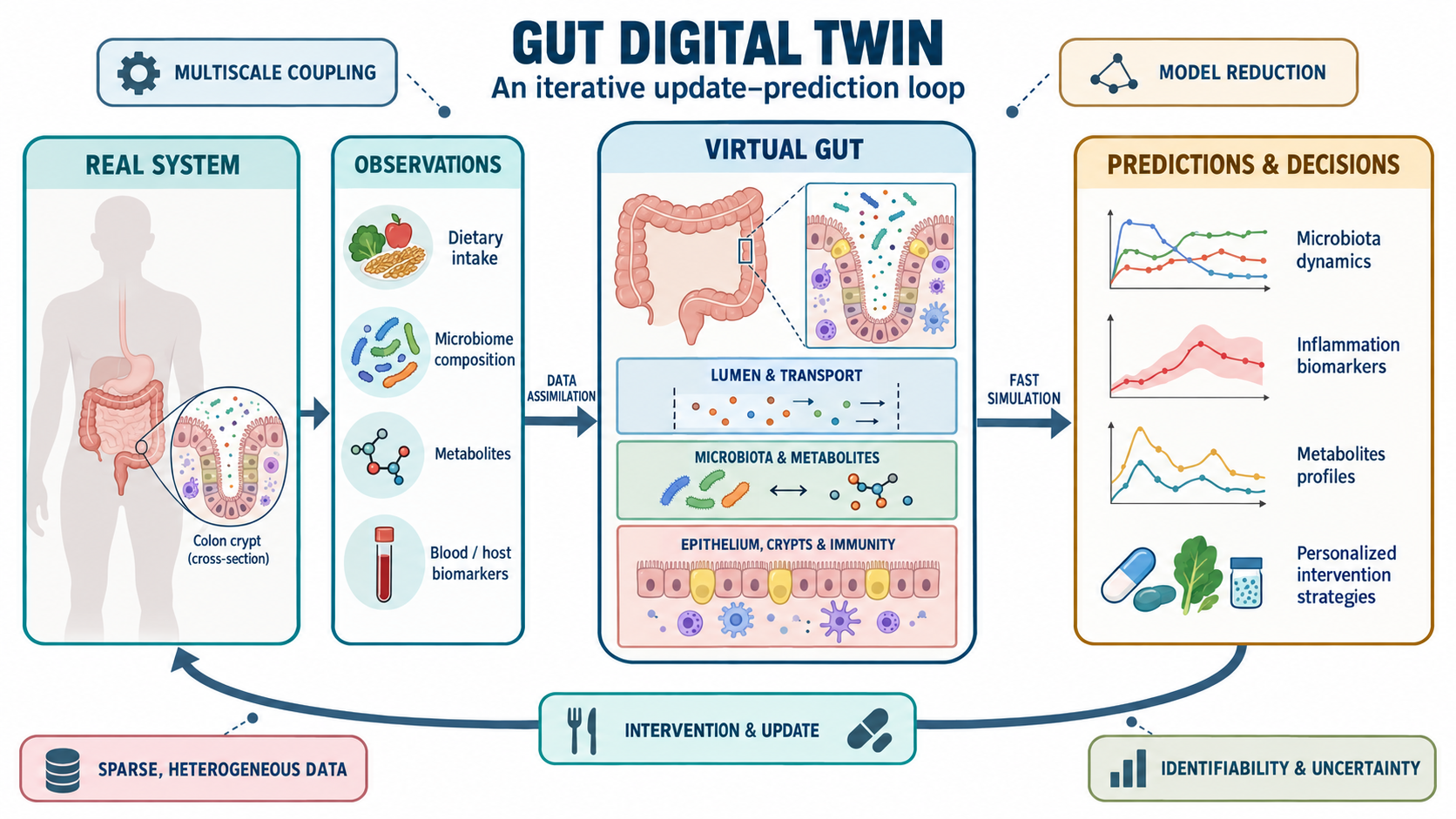
Gut Digital Twin update-prediction loop connecting observations, a virtual gut model and personalised interventions
Gut Digital Twin framework: multiscale coupling, data assimilation and prediction.

02 · Eye2Heart

Linking cardiovascular and ocular haemodynamics

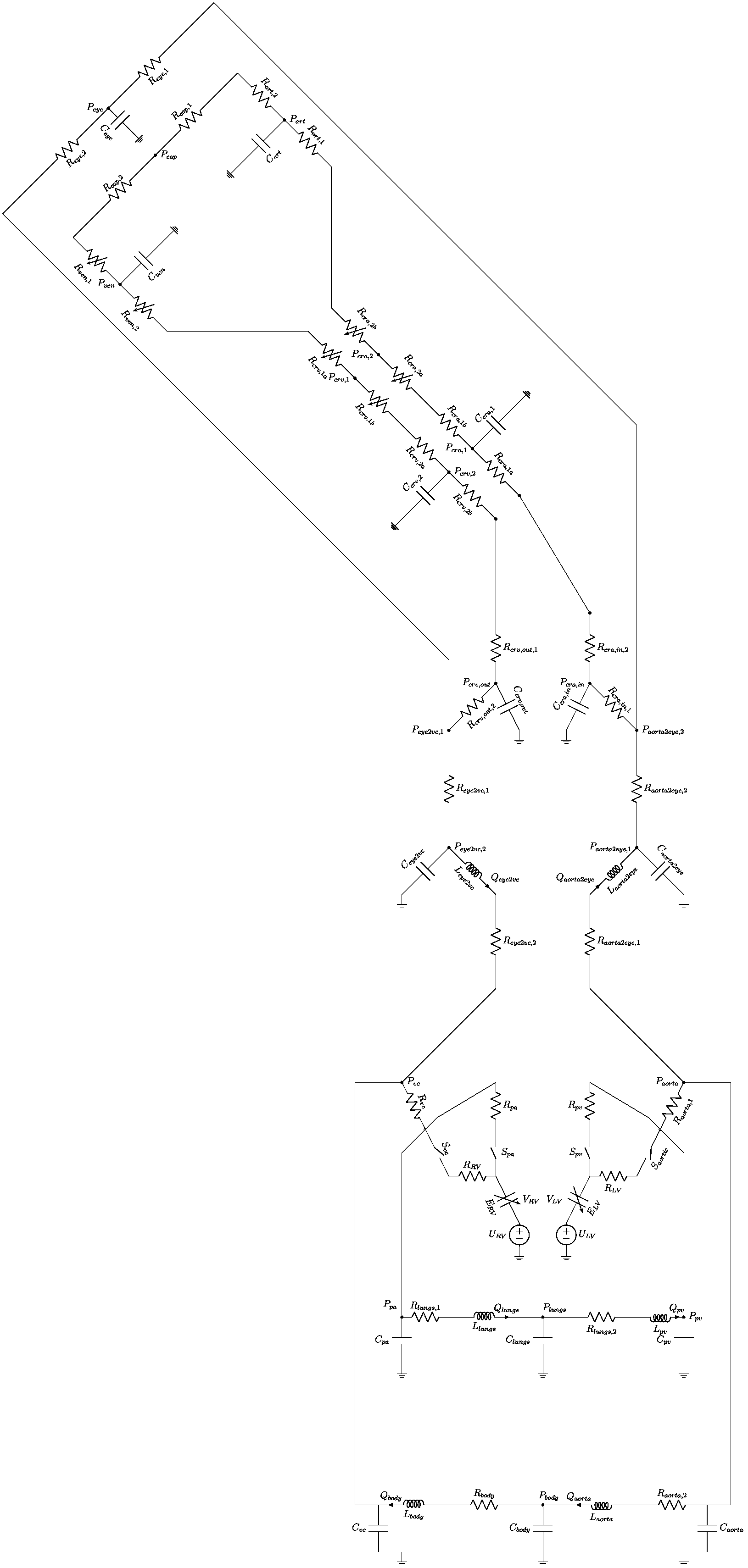
Eye2Heart connects the systemic circulation with the ocular and retinal vasculature in a reduced mathematical model. The circuit represents how cardiac and vascular dynamics propagate towards measurable signals in the eye.

The framework supports sensitivity analysis, uncertainty quantification and parameter inference, with the longer-term goal of using non-invasive ocular observations to investigate cardiovascular function.

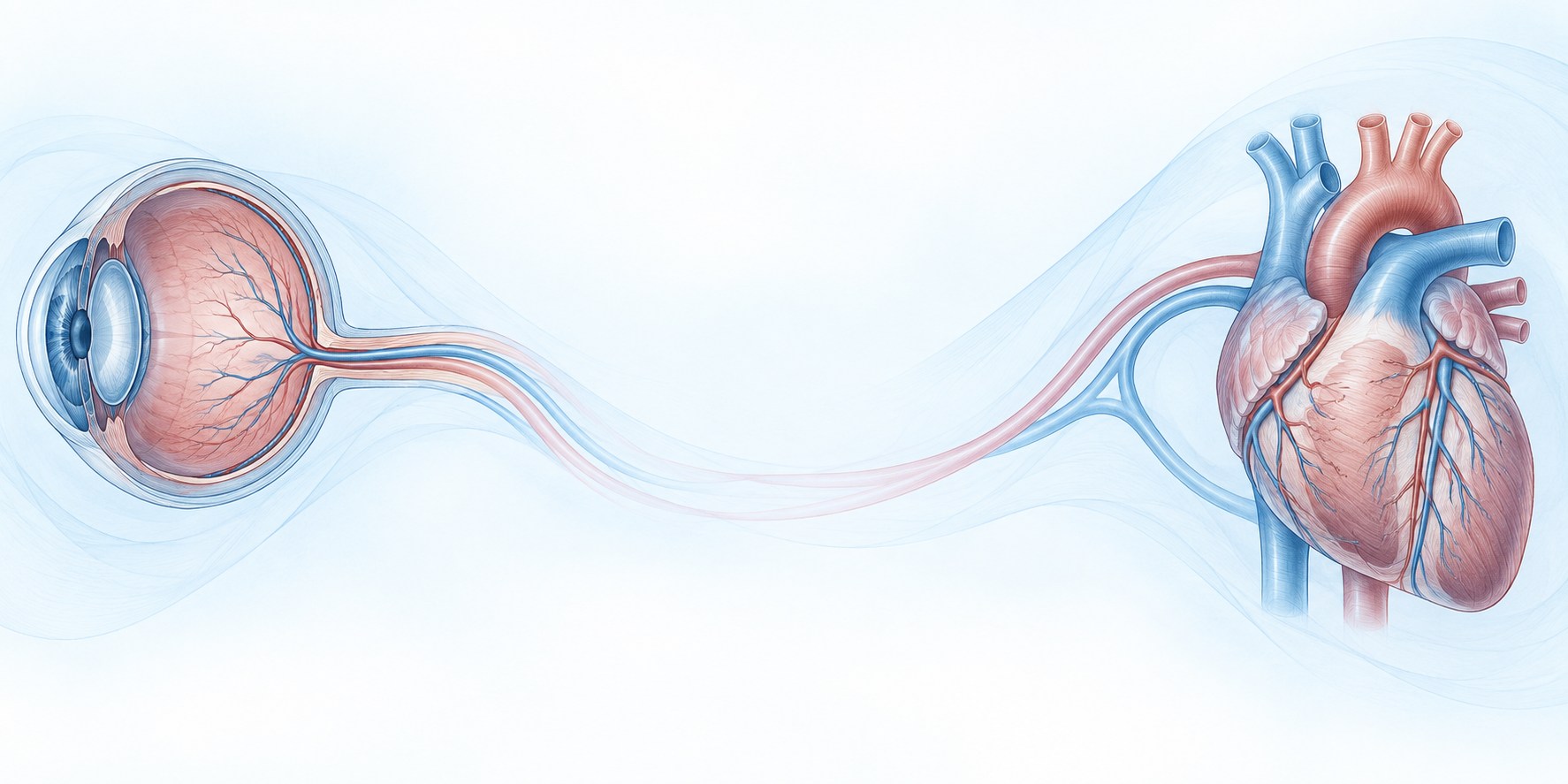
Schematic eye and heart connected through the circulationEye2Heart lumped-parameter cardiovascular and ocular circuit
Eye2Heart couples cardiovascular and ocular compartments in one reduced circuit.

03 · FermenTwin

Predicting microbial communities during fermentation

FermenTwin develops a digital twin for continuous plant-juice fermentation. Real-time microbiome sequencing, monitored mini-bioreactors and mathematical models are brought together to predict microbial-community and metabolic dynamics.

The objective is to anticipate responses to biotic and abiotic perturbations and support decisions that restore a desired reference fermentation, opening routes towards stable, controlled food-production processes.

Official FermenTwin project page
FermenTwin logo showing a digital bioreactor and a physical fermentation vessel

Theme 02

Learning and reducing models

Detailed biological models are powerful, but they are often expensive to simulate and difficult to calibrate from partial observations. I combine three mathematical and computational strategies to make them identifiable, efficient and data-aware.

Inverse problems

Estimate parameters, interactions and hidden biological states from noisy, indirect and incomplete measurements.

Model reduction

Construct fast surrogate models for sensitivity analysis, uncertainty quantification, personalisation and real-time digital twins.

Physics-informed learning

Use PINNs and hybrid learning methods to incorporate differential equations and biological constraints into data analysis.

Applications

Human microbiotaHost–microbiota dynamics in the gut
FermentationMicrobial communities and process control
Plant–pathogen systemsPlant immune-response dynamics
Cardiovascular modelsCirculation, ocular signals and inference
Salmonella in poultryInvasion dynamics in livestock
Insect communitiesKeystone predation and ecological interactions